.png)



Summary
Europe's largest railway infrastructure management firm faced severe system integration challenges after shifting to a devolved IT model, which led to non-standard, independent regional applications. To regain operational efficiency, the organization launched two major initiatives: establishing standardized Reference Architectures and migrating open data to a modern platform. By defining architectural guardrails and executing a detailed IT migration roadmap, the firm successfully streamlined development, improved public data accessibility, enhanced enterprise interoperability, and achieved estimated cost savings of several million GBP.
Challenge
A significant structural shift to a devolved IT model granted regional routes greater autonomy over their technology needs. While this empowered local teams, it led to the development of independent, siloed applications tailored only to specific requirements. This fragmentation resulted in severe system integration challenges, non-standard architectures, and widespread duplication of IT efforts across Europe's largest railway network.
Objective
Standardize the enterprise IT ecosystem to enable modernization and efficiency. The project focused on two primary goals: 1) Creating and governing standard Reference Architectures for the entire organization, and 2) Migrating open data from a legacy system to a modern platform.
Solution
Design a series of standardized Reference Architectures tailored to critical IT capabilities and secure their approval through a strict governance review. Concurrently, conduct a comprehensive platform analysis to formulate an IT strategy roadmap for safely migrating public-facing open data to a modern, accessible architecture.
Execution
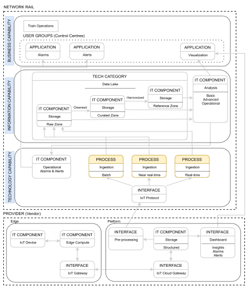
- Developed a series of Reference Architectures tailored to various critical IT capabilities across the organization.
- Successfully cleared a rigorous governance review process by the internal Architecture Review Board.
- Published the approved architectures for widespread adoption across all autonomous routes and regions.
- Provided ongoing support and updates to accommodate evolving technological needs.
- Conducted a comprehensive technical analysis of the existing legacy open data platform against the new target platform.
- Developed a detailed IT strategy roadmap outlining the specific architecture and steps required for data migration.
- Coordinated directly with stakeholders to implement the migration strategy, continuously monitoring progress and addressing technical roadblocks.
Results
- Achieved significant operational cost savings, estimated at several million GBP.
- Enhanced the integration and interoperability of systems across the previously siloed organization.
- Streamlined development processes, effectively reducing the duplication of engineering efforts and resources.
- Ensured consistent enterprise-wide adherence to industry best practices and standards.
- Successfully migrated to the new open data platform, enhancing overall data publishing capabilities.
- Improved data accessibility and usability for public users.
- Strengthened the firm’s core IT infrastructure, strategically aligning it with future growth and technological advancements.
Tech Stack
This was delivered as a service under the Technology Architecture Advisory and Services offering
Key Takeaways
- Autonomy Requires Guardrails: Devolved IT models foster regional agility but require standardized Reference Architectures to prevent integration bottlenecks, data silos, and technical debt.
- Governance Ensures Adoption: Subjecting proposed architectures to an Architecture Review Board ensures the frameworks actually meet enterprise security and interoperability standards before widespread publication.
- Legacy Migration Drives Tangible ROI: Moving from outdated legacy systems to modern open data platforms not only improves public accessibility but can yield massive financial returns—in this case, multi-million GBP cost savings.
Business/Solution Architectures | Deliverables